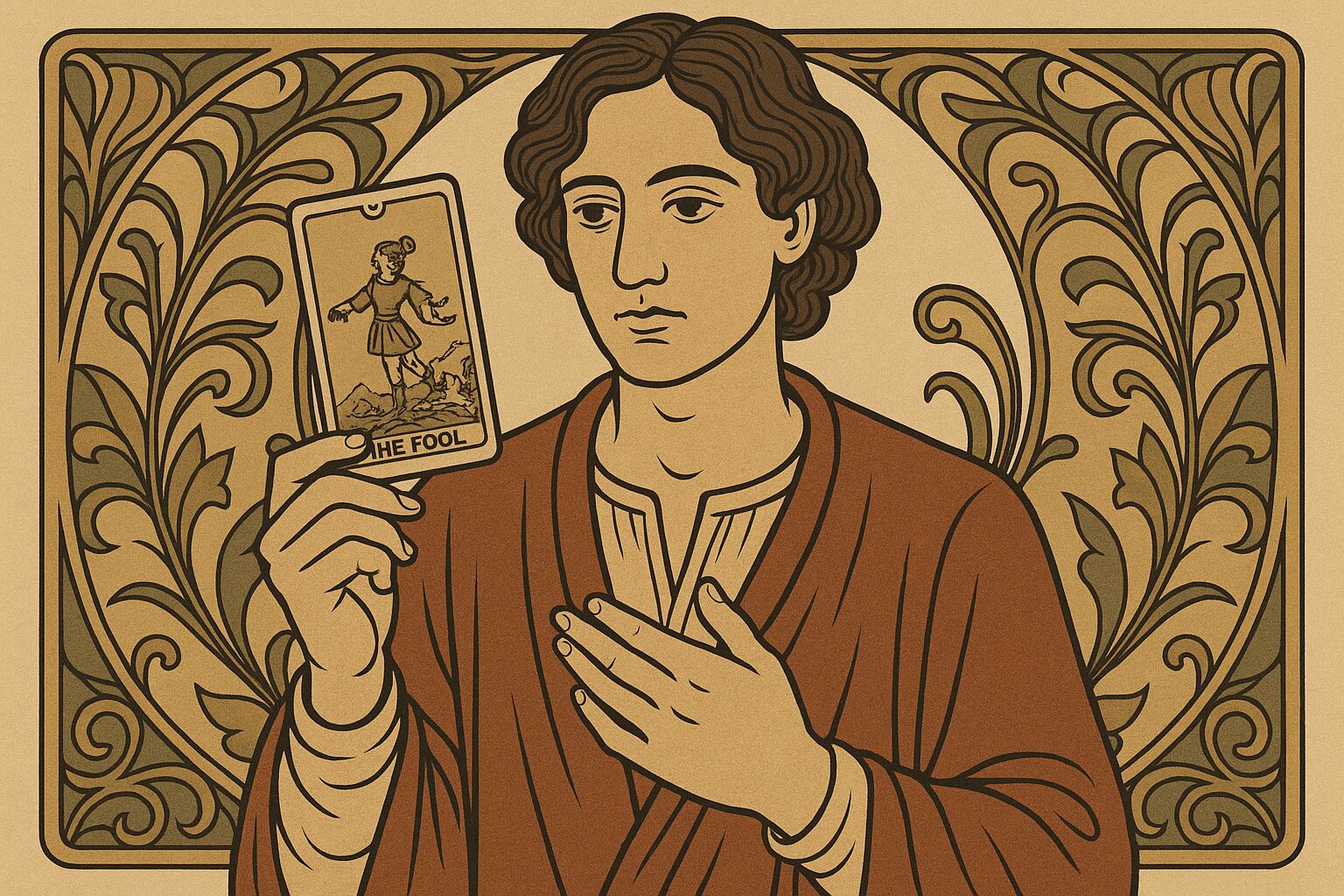
What the word means
- Querent — the person asking, the one who comes with a question.
- Tarot reader — the one who lays out and interprets the cards. If you read for yourself, both roles are yours.
- Quesited — the subject of the question: the person, event or thing being asked about.
In English, the stress usually falls on the first syllable: QUER-ent.
Querent and quesited in horary astrology
Horary astrology casts a chart for the moment a question is asked and answers it from that chart. In such a chart, the person asking, the querent, is represented by the ruler of the sign on the cusp of the first house, while the thing being asked about, the quesited, is assigned to the corresponding house1. The classic textbook of horary astrology is William Lilly’s Christian Astrology (1647)1.
Both words passed from astrology into tarot, where they are used in much the same way: the querent is who is asking, the quesited is what or whom the question is about.
The querent in tarot
In The Pictorial Key to the Tarot, Arthur Waite uses the word directly. For example, The Magician upright can mean “the Querent himself, if male,” and The High Priestess “the Querent herself, if female”2. The card that represents the querent in a spread is called the significator — learn more in the article “Significator in tarot”.
In the Celtic Cross, Waite gives the querent separate positions: the seventh card describes the querent themselves — their position and attitude, the eighth their environment, the ninth their hopes and fears3.
What the “querent’s state” means
Tarot readers use this name for the position in a spread that shows what the querent feels and thinks about the situation right now. It helps gauge how ready the person is for the answer: a calm card means you can speak directly, an anxious one means it’s better to start with support. In our Celtic Cross this position is called “Yourself,” and in the Relationship spread it’s “You in this relationship.”
Can the querent draw the cards?
Yes. Some tarot readers let the querent shuffle the deck or pick cards from a fan, while others do everything themselves. In his description of the Celtic Cross, Waite addresses all instructions to the reader and never mentions the querent shuffling or cutting the deck3. Learn more in the articles “How to shuffle tarot cards” and “How to pick tarot cards”.
Can you be your own querent?
Yes, and most people start exactly that way. The specifics and pitfalls of reading for yourself are covered in the article “Can you read tarot for yourself?”.
Frequently asked questions
Who is the querent?
The person who asks the question in a reading — the one the spread is laid out for.
What is the difference between querent and quesited?
The querent is the one asking; the quesited is what or whom the question is about. The pair of terms comes from horary astrology1.
How do you pronounce “querent”?
With the stress on the first syllable: QUER-ent.
Which card represents the querent in a tarot spread?
The significator — a card chosen to represent the querent. Waite describes how to choose it in the Celtic Cross3.
How this article was prepared
This text was written with the help of AI, based on the sources listed below and on the questions people actually search for. Every factual statement — about the history of decks, what a deck contains, what authors wrote — has a footnote. The text was then checked by a separate AI instance that took no part in writing it: it compared the facts with the footnotes, and errors were corrected. The English version is a translation of the original Russian article.
We describe reading practices — how to shuffle, charge or “cleanse” a deck — as traditions and habits of tarot readers, not as proven methods: there is no scientific evidence for divination. Read more on our editorial policy page. Found a mistake? Let us know via the contact form.
Sources
- Horary astrology — Wikipedia. Querent and quesited in horary astrology, William Lilly (1647) en.wikipedia.org
- A. E. Waite. The Pictorial Key to the Tarot, Part III, § 3: The Greater Arcana and their Divinatory Meanings. Upright and reversed meanings of the Major Arcana sacred-texts.com
- A. E. Waite. The Pictorial Key to the Tarot, Part III, § 7: An Ancient Celtic Method of Divination. Choosing the significator, shuffling, the Celtic Cross spread sacred-texts.com