Why shuffle the cards
Technically, to mix the deck after the previous reading. In the tradition of tarot reading, shuffling is also a time to focus on the question: while your hands are busy, you keep the question in mind. There is no evidence that the shuffling method affects the answer — consistency and a calm mind matter, not the “correct” ritual.
Four ways to shuffle
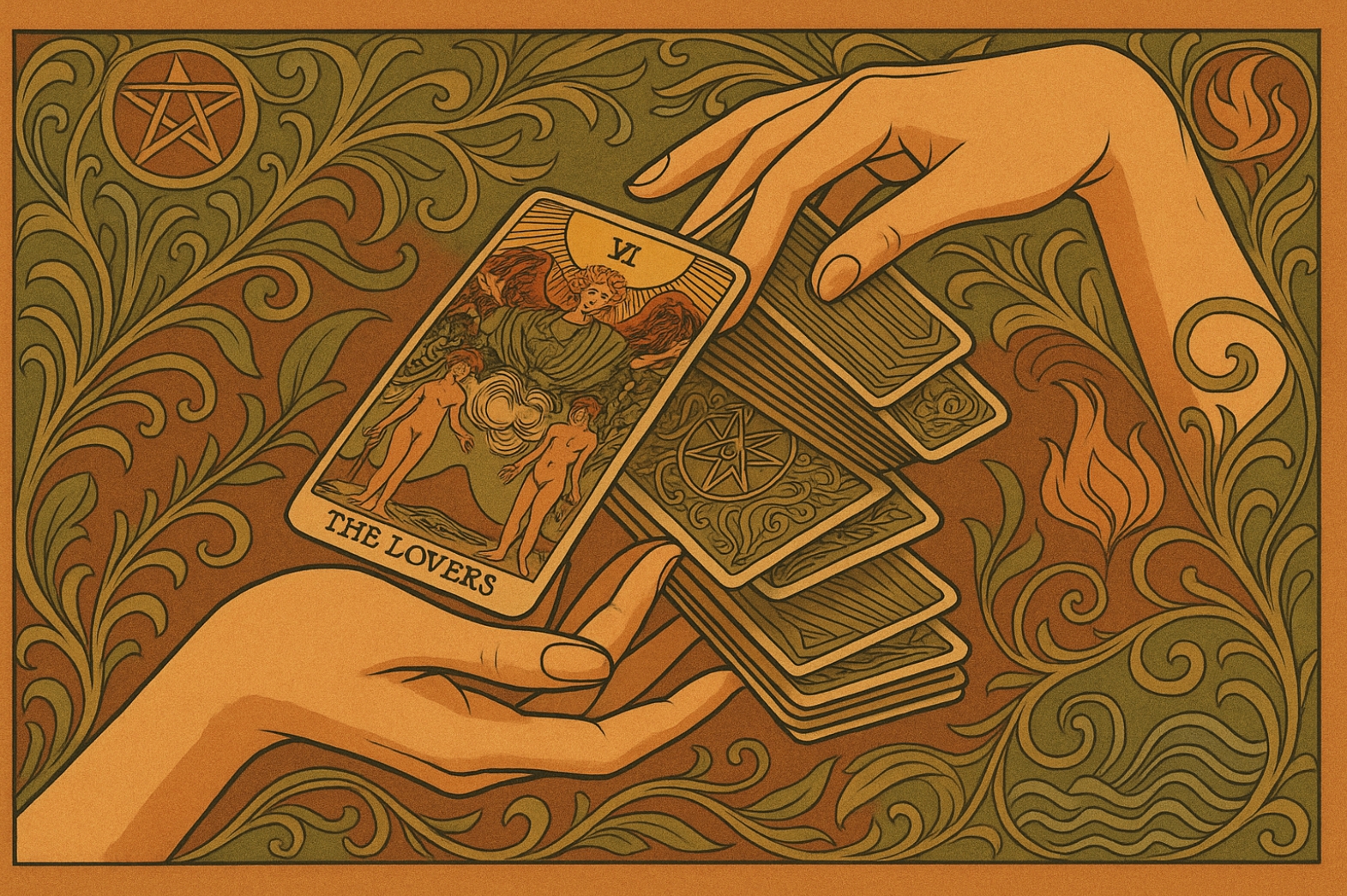
- Overhand shuffle (top to bottom). Hold the deck in one hand and use the other to lift off small packets and move them to the front or back. A gentle method that works for any cards.
- Table “wash.” Spread the cards face down and mix them with your palms in circular motions, then gather them up. The best way to get reversed cards.
- Cutting. Divide the deck into several piles and stack them back in a different order.
- Riffle shuffle. The two halves of the deck are riffled into each other, casino-style. It mixes thoroughly but bends the cards — we don’t recommend it for expensive decks.
How to get reversed cards
A new deck comes with all the cards facing the same way. If you read reversed cards, you need to “introduce” them:
- mix the cards on the table — some will turn around on their own;
- or split the deck into two piles, rotate one by 180° and put them back together.
If you don’t use reversed cards, simply straighten them all upright after shuffling, before the reading.
How long to shuffle and who cuts the deck
There is no fixed number: shuffle until you feel the question is clear and the deck is mixed. In his description of the Celtic Cross, Waite advises shuffling the deck and cutting it three times, holding the cards face down1. Waite addresses his instructions to the reader and never mentions the querent shuffling or cutting1.
In modern practice, both options are common: if you read for another person, some tarot readers let them shuffle or cut the deck, while others do everything themselves. Choose whichever suits you and stick with it.
Shuffling and picking cards
After shuffling, you can take cards from the top of the deck, draw them from a fan, or lay out the spread using the top cards. Learn more in the article “How to pick tarot cards the right way”.
If a card falls out of the deck while you shuffle, many tarot readers consider it significant and look at it separately. This is a tradition, not a rule — you can simply put the card back in the deck.
How to take care of your cards
- Shuffle with dry hands on a clean surface.
- Don’t bend the deck when riffling — the edges will start to split.
- Keep the deck in a box or pouch so the cards don’t bend.
If you’d rather not shuffle by hand, try online tarot spreads: the cards are shuffled by a random number generator.
Frequently asked questions
How many times should you shuffle tarot cards?
There is no fixed number. In his description of the Celtic Cross, Waite advises shuffling the deck and cutting it three times1.
Who should shuffle the tarot cards — the reader or the querent?
Both options are found in practice. Waite addresses his instructions to the reader and doesn’t mention the querent shuffling1. Choose whichever suits you and stick with it.
What does it mean if a card falls out while shuffling tarot?
You can treat it as an extra sign or simply put it back in the deck — there is no single rule.
How this article was prepared
This text was written with the help of AI, based on the sources listed below and on the questions people actually search for. Every factual statement — about the history of decks, what a deck contains, what authors wrote — has a footnote. The text was then checked by a separate AI instance that took no part in writing it: it compared the facts with the footnotes, and errors were corrected. The English version is a translation of the original Russian article.
We describe reading practices — how to shuffle, charge or “cleanse” a deck — as traditions and habits of tarot readers, not as proven methods: there is no scientific evidence for divination. Read more on our editorial policy page. Found a mistake? Let us know via the contact form.
Sources
- A. E. Waite. The Pictorial Key to the Tarot, Part III, § 7: An Ancient Celtic Method of Divination. Choosing the significator, shuffling, the Celtic Cross spread sacred-texts.com