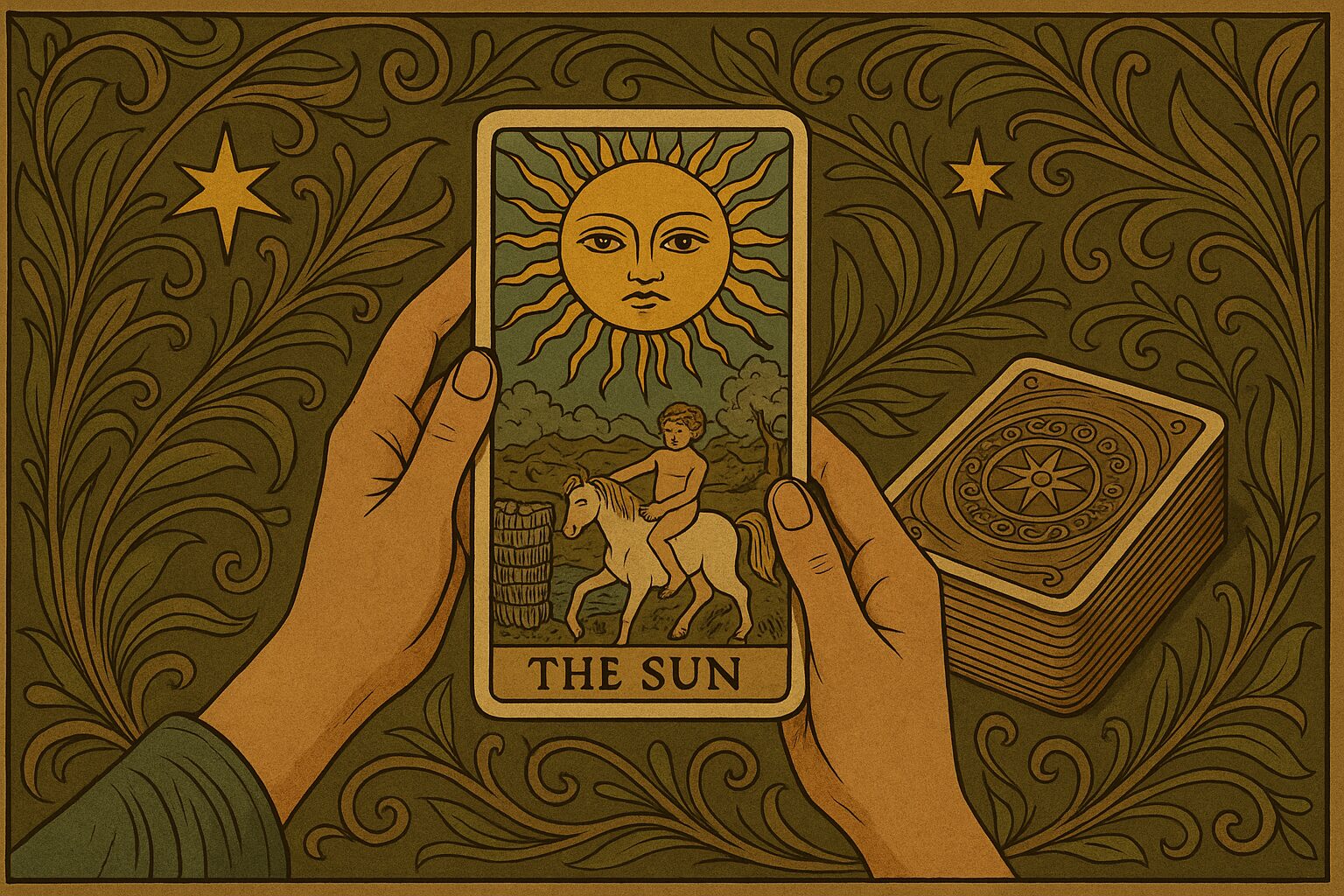
How to draw your card of the day
- In the morning, before the day gets going, take your deck and shuffle it.
- Silently ask: “What should I pay attention to today?”
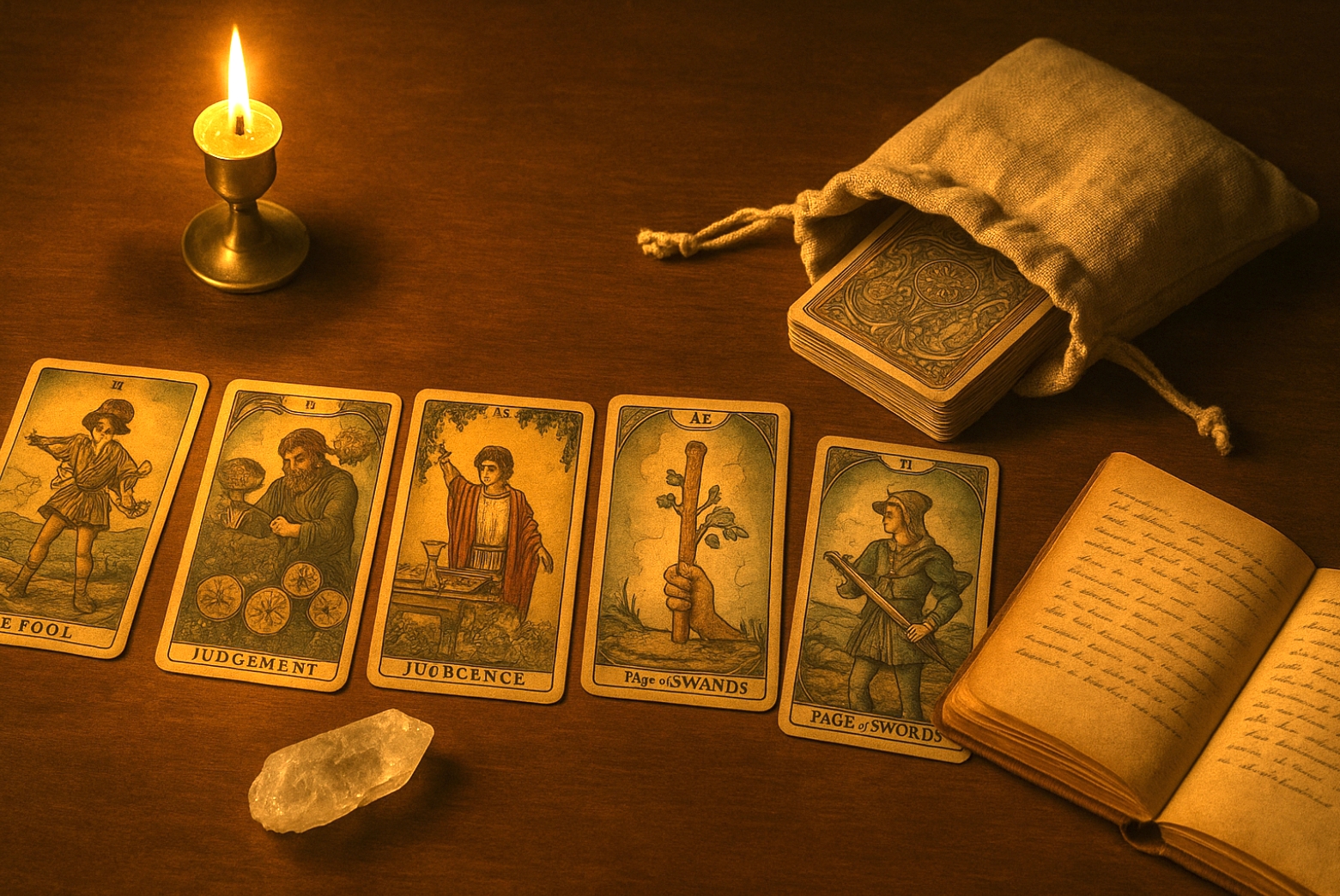
- Draw one card — from the top or from a fan (methods are in the article “How to pick tarot cards”).
- Look at the image before reading the meaning: what feeling does it stir in you?
- Read the meaning and write down one phrase — your advice for the day.
- In the evening, go back to your note: how did the card show up?
If you don’t have a deck at hand, use the online Card of the Day, and for the next day, the Card for Tomorrow.
How to interpret the card of the day
The card of the day doesn’t answer “what will happen” but “how to live this day.” So read it as advice:
- A Major Arcana card — a day with an important theme: a decision, a turning point, a lesson. For example, The Hermit advises some quiet time, The Chariot advises acting decisively.
- Wands — tasks, initiative, energy.
- Cups — feelings, communication, loved ones.
- Swords — thoughts, conversations, decisions, possible arguments.
- Pentacles — work, money, everyday life, the body.
The meaning of every card is in the Card meanings section.
If you draw a “scary” card
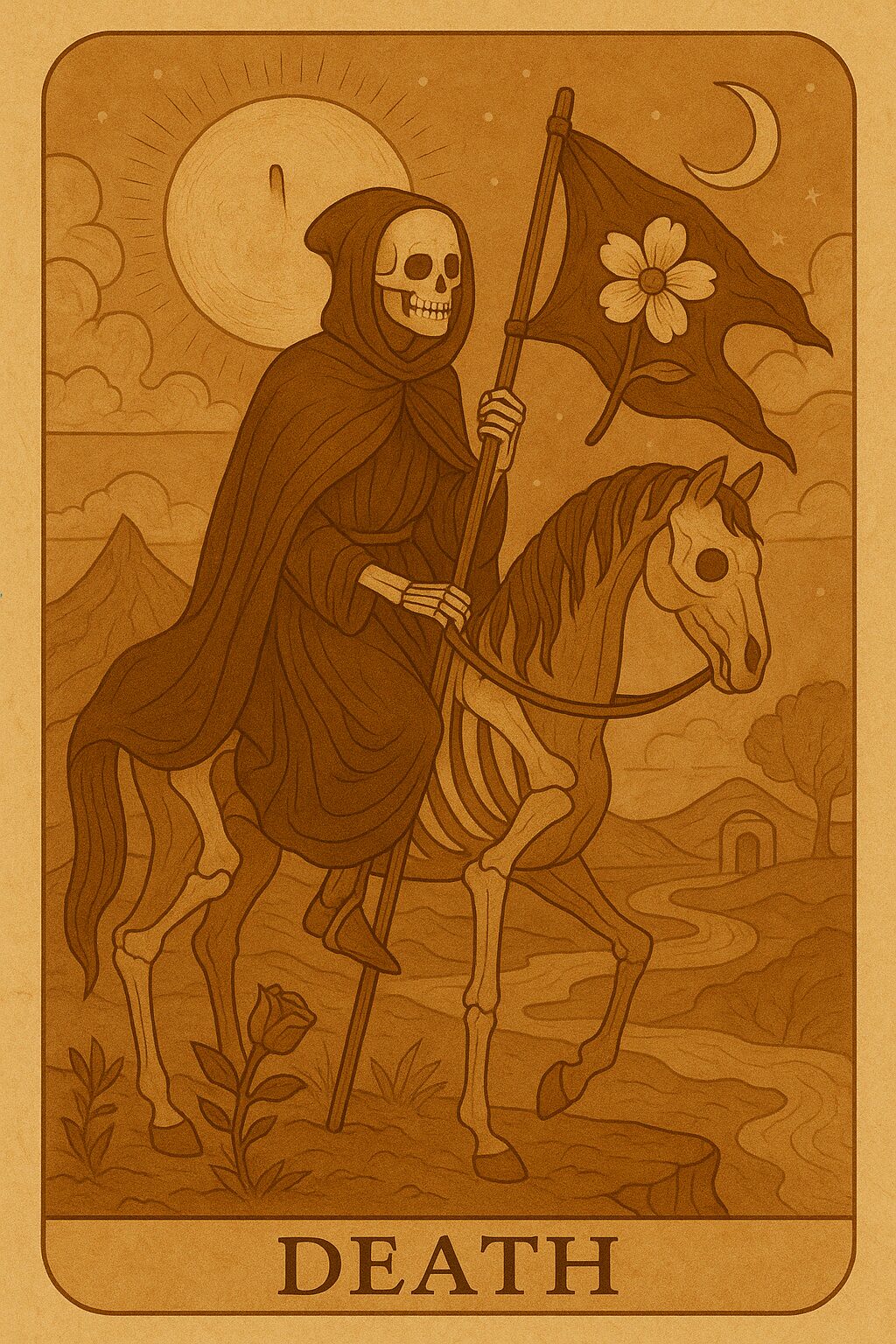
Death, The Tower or the Ten of Swords as your card of the day almost never mean the events their names suggest. Death is a day to finish something old, The Tower means being ready for surprises, the Ten of Swords means not blowing a problem out of proportion and letting it end. Difficult daily cards are useful: they show you where to be more careful today.
A reversed card of the day
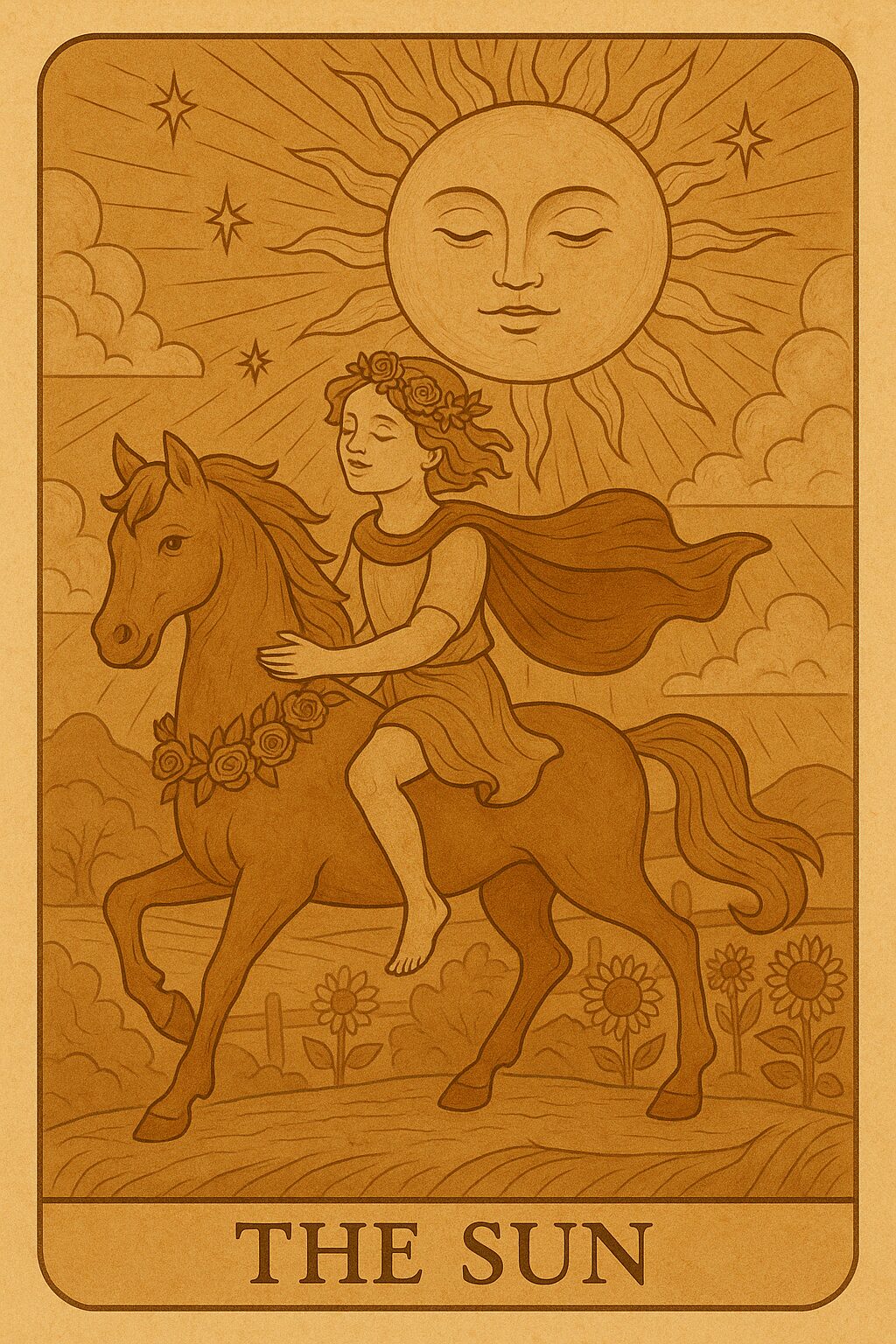
If you use reversed cards, a reversed card of the day means its energy is weaker today or will play out internally rather than in events. The Sun reversed: joy will be quieter than you’d like; The Moon reversed: worries will recede. If you don’t use reversals, simply turn the card upright and read the upright meaning.
A card of the day journal
Write down the date, the card, your first impression and, in the evening, what happened. After a month you will see:
- which cards come up more often;
- how the meanings play out in your own life;
- where you bent the interpretation to fit events.
This is the best way to learn the deck: the meanings stick through your own experience, not from a cheat sheet.
Common mistakes
- Drawing a second card if you didn’t like the first.
- Expecting specific events from the card of the day.
- Drawing a card “for today” in the evening — by then it can’t tell you anything.
- Not keeping notes — without them, the card of the day quickly turns into mere entertainment.
Frequently asked questions
What is a tarot card of the day?
A one-card spread drawn in the morning as advice for the day: what to pay attention to and what to avoid.
When is the best time to pull your daily tarot card?
In the morning, at the start of the day. In the evening you can draw a card for tomorrow.
Can you pull the card of the day more than once?
There’s no point: the first card is the answer. A second one will only confuse you.
What if I get a bad tarot card of the day?
Read it as a warning and advice, not a verdict: a difficult card shows where to be more careful today.
How this article was prepared
This text was written with the help of AI, based on the sources listed below and on the questions people actually search for. Every factual statement — about the history of decks, what a deck contains, what authors wrote — has a footnote. The text was then checked by a separate AI instance that took no part in writing it: it compared the facts with the footnotes, and errors were corrected. The English version is a translation of the original Russian article.
We describe reading practices — how to shuffle, charge or “cleanse” a deck — as traditions and habits of tarot readers, not as proven methods: there is no scientific evidence for divination. Read more on our editorial policy page. Found a mistake? Let us know via the contact form.